
From Blender to Nuke: Unlocking Light Group Controllability with Lobe Passes
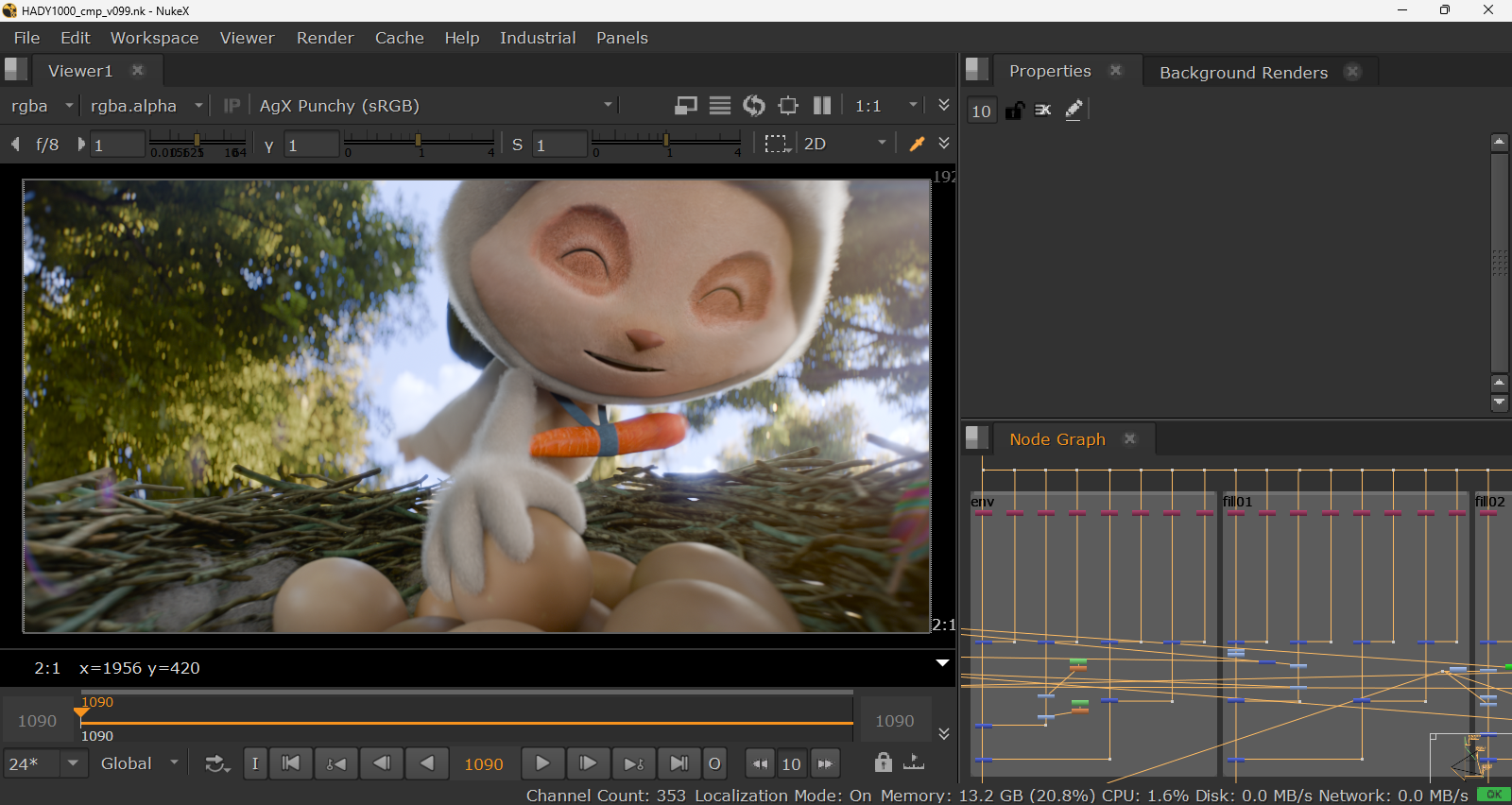
While Blender Lightgroups can output Cycles render passes by light group, obtaining the combined color of a single light is still insufficient in feature-film Nuke compositing. What compositors truly need are Direct and Indirect Lobe passes: the ability to explicitly know how much energy a specific light contributes to Diffuse, Glossy, Transmission, and Volume, and to correct these components without resubmitting the entire frame.
Lightgroups Still Flatten Material Responses
Traditional Lightgroups are suitable for overall adjustments to a light's exposure or color temperature, but they fail to address more specific issues.
A single Key Light might simultaneously generate the Diffuse on a character's skin, the Glossy on eyeballs and sweat, and the Transmission through ears and hair. When a compositor only wants to darken the highlights on the face, grading the entire Lightgroup will inadvertently alter the diffuse and transmission, destroying an already approved lighting balance.
Automotive shots are even more sensitive. The softbox reflections, metallic base color, and glass transmission on car paint might originate from the same group of lights, but all three require completely different compositing treatments. A traditional Combined pass cannot provide this level of granularity.
Ultimately, a localized highlight issue is often kicked back to the Lighting department to adjust the lights, re-render, re-transfer the EXR, and then have Comp re-check it. High-sample, hair, volume, and complex reflection shots can subsequently burn through hours or even days of rendering resources.
Splitting Every Light Path Inside the Cycles Kernel
Industrial CG Platform's Lightgroup Lobe Passes embed the splitting logic directly into Cycles' integration and pass-writing stages, eliminating the reliance on Material AOVs or post-render color separation.
Each light group can output:
Diffuse_Direct
Diffuse_Indirect
Glossy_Direct
Glossy_Indirect
Transmission_Direct
Transmission_Indirect
Volume_Direct
Volume_Indirect
Once these passes are written into a Multilayer EXR, they can be extracted, adjusted, and additively reconstructed in Nuke using Shuffle nodes. Compositors can precisely modify a single lobe of a specific light while keeping all other material responses untouched.
Keeping Modifications in the Compositing Stage
Lightgroup Lobe Passes keep a massive amount of modifications—which would otherwise require re-renders—firmly in Nuke:
- Removing a specific light's Glossy contribution on car paint while preserving the car body's Diffuse;
- Dimming the direct highlights on a character's face without affecting the indirect bounces;
- Tweaking glass Transmission while keeping surface reflections intact;
- Suppressing Volume contribution in smoke without touching solid assets;
- Modifying individual light components after client reviews without launching costly renders.
This drastically reduces the round-trips between Lighting and Comp. Lighters can focus on addressing issues that truly affect light paths, shadows, or sampling quality, while compositors can finalize exposure, color, and local energy balancing.
For shots containing hair, volumes, motion blur, and highly reflective materials, the return on investment of avoiding a single full re-render far outweighs the minor storage cost generated by adding a few EXR passes.
Retain Enough Data to Reduce Meaningless Re-Renders
Lightgroup Lobe Passes prevent critical light transport information from being prematurely flattened during the rendering phase. More controllable passes mean less rework, shorter review loops, and a more stable final delivery.
Visit the official Industrial CG Platform homepage, download the current build or grab the source code from GitHub, and integrate Blender Lightgroups into a more precise, low-re-render-cost Nuke relighting workflow.